Categories
Uncategorized

THE UNPREDICTABILITY OF LIFE

I am in the process of completing my third year at my present residence in Sofokyere. During the course of the thirty months that have transpired since my arrival here in November of 2019, I made some new friends. A few men and several women to be exact. Some of the men are tradesmen. Some are small business owners. Others are artisans like barbers, tailors, and painters. The women in my circle of friends are hairdressers, seamstresses, shopkeepers, and teachers. I treasure my relationship with all of them. Because they all treat me like a first-class member of the community and seek out my society. The only dispute that I have encountered since my arrival here. Is, the one I had with Mr. Sam, the son and personal agent of the landlord who is living in Belgium. A pipe had ruptured beneath my kitchen floor and after I tried to bring the matter to his attention, he did everything possible to worm his way out of his duty to effect the required repairs. Finally, he came to the property and gave me an ultimatum. “That if I wouldn’t make all the repairs at my own expense then I would have to leave.”

Since the rate of inflation in Ghana is 60 percent; cozy apartments like mine are hard to come by, and since I actually like it here, I simply did as I was told. Not only did I make all the necessary repairs. I also installed hot water heaters in both of my bathrooms. The heat in this country is almost unbearable during the summer months. Therefore I also installed air conditioning units in both of my bedrooms. Several months before the dispute arose I spoke to Mr. Sam about the possibility of enclosing my front porch. At that time he agreed and gave me permission to proceed. A few months after the dispute about the repairs I reminded him of our agreement. He said that he would speak to the landlord about it and later advised me that she wouldn’t go along with my request. I knew that this development was retribution against me. For daring to challenge his decision about the repairs. This custom of requiring tenants to repair the buildings or apartments in which they live is a widespread practice, among landlords, throughout the Republic of Ghana.

At the beginning of August, I was standing outside the large iron gates at the entrance of this property. Looking across the lane at the empty lot on the other side of this thoroughfare. Contemplating all the grass, and shrubbery that had taken over that plot of land. Along with all the trees that had shot up there from the rich soil. In just a matter of a few months. Wondering when the owner would see fit to come and clear it. Shortly thereafter I was joined by the caretaker who happens to be one of the relatives of Mr. Sam. While conversing with me he casually informed me that Mr. Sam had died. I was surprised at the reception of that piece of news. Even though one of the phrases that I had learned while employed as a clergyman was, “In the midst of life there is death.” Mr. Sam happened to be one of the owners of a gold mine in Obuasi. The largest gold-producing area in the Ashanti Kingdom. He also happened to own several houses. A wealthy man by any estimate. Yet he was dead at the tender age of 33. If as mere humans we had any control over our own existence then he would still be alive today. Tall, and handsome yet his body was wracked by disease, exacerbated by alcoholism.

He is not alone in his achievement of exiting life’s portals at an early age. There is a very long pantheon of famous people who’ve died in their thirties. Such a list includes Alexander The Great, Bob Marley, Nipsey Hussle, Misty Upham, Brittany Murphy, Anna Nicole Smith, John F. Kennedy Junior, et al.

The 30s tend to be a decade where people settle down and their lives fall into place when it comes to families and jobs. Obviously, there are endless exceptions, but generally, the 30s are seen as a good decade, when you’re still young, but old enough to have a bit of knowledge about the world that saves you from the pain and mistakes of your teens and 20s. You can see where your life is going and make some concrete plans for the future.(GRUNGE, Famous Celebrities Who Died in Their Thirties, by Kathy Benjamin, June 17, 2022).

“In fiction: we find the predictable boring. In real life: we find the unpredictable terrifying.”
― Mokokoma Mokhonoana

“Life is like the oil within a lamp. It can be measured, but the pace at which it burns depends on how the dial is turned day by day, how bright and fierce the flame. And there is no predicting whether the lamp might be knocked to the ground and shatter, when it could have blazed on a great while longer. Such is the unpredictability of life.”
― Margaret Rogerson, Sorcery of Thorns

What exactly were Mr. Sam’s worldly plans, I wonder? Did he envision building some more beautiful homes? Did he possibly contemplate acquiring a luxurious motorcar? Is it possible that he might have thought about getting himself some glamorous and beautiful woman? He might have been planning to purchase a large estate that produces thousands of bags of cashew and cocoa each year. Did he ever experience the love of a woman, or did he have any enemies? He told me once that he wanted to go to America. I wonder why? Was it so that he could purchase and eat some original Kentucky Fried Chicken? Or indulge himself with some real Pizza? Or he might have planned to spend countless hours before a small cozy fire roasting peanuts and cashew nuts whenever he felt like it. Whatever his plans were. Grandiose or modest. They have all come to nothing now.

For the living know that they will die; But the dead know nothing,
And they have no more reward, For the memory of them is forgotten. Also, their love, their hatred, and their envy have now perished; Nevermore will they have a share In anything done under the sun. Go, eat your bread with joy, And drink your wine with a merry heart; For God has already accepted your works. Let your garments always be white, And let your head lack no oil. Live joyfully with the wife whom you love all the days of your vain life which He has given you under the sun, all your days of vanity; for that is your portion in life, and in the labor which you perform under the sun. Whatever your hand finds to do, do it with your might; for there is no work or device or knowledge or wisdom in the grave where you are going.
Ecclesiastes 9:5-10. (NKJV).

Categories
Uncategorized

UNTO 2300 DAYS, THEN SHALL THE SANCTUARY BE CLEANSED (CONT’)

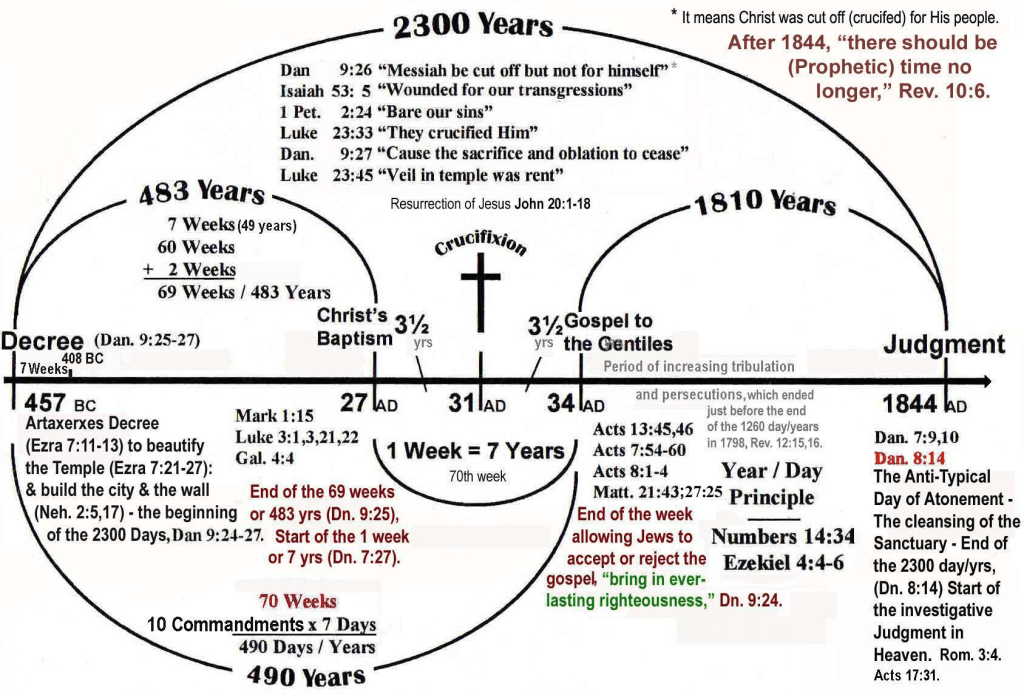
What exactly is the full import of this prophecy? It was given during the duration of the Jewish exile from the promised land, while they were still in Babylon. The second temple, built by King Herod was still standing, when Jesus cleansed it twice. The first cleansing was executed at the beginning of Christ’s Ministry in 27 A.D., and the second cleansing occurred in 31 A.D., shortly before His crucifixion. This prediction by Daniel the prophet, couldn’t have been referring to either of the cleansings administered by The Saviour. Because the time frames of those cleansings do not coincide with the 2300-day time period. Which most Bible scholars believe to have commenced in 457 B.C. As can be clearly seen from the chart provided, exactly 486 years transpired from the promulgation of Emperor Artaxerxes’ decree, for the restoration and rebuilding of Jerusalem, and the crucifixion of The Messiah.

The attentive reader needs to be appraised of the fact that according to scripture one day of prophetic time represents one full year. This principle is clearly established in God’s Word. “According to the number of the days in which you spied out the land, forty days, for each day you shall bear your guilt one year, namely forty years, and you shall know My rejection.  I the Lord have spoken this. I will surely do so to all this evil congregation who are gathered together against Me. In this wilderness, they shall be consumed, and there they shall die.” Numbers 14:34-35. (NKJV). Accordingly, the 2300 days time period represents 2300 years. That time period commenced in 457 B.C. This same prophetic principle is clearly demonstrated in the writings of the prophet Ezekiel. “Lie also on your left side, and lay the iniquity of the house of Israel upon it. According to the number of the days that you lie on it, you shall bear their iniquity.  For I have laid on you the years of their iniquity, according to the number of the days, three hundred and ninety days; so you shall bear the iniquity of the house of Israel. And when you have completed them, lie again on your right side; then you shall bear the iniquity of the house of Judah forty days. I have laid on you a day for each year.” Ezekiel 4:4-6. (NKJV). Let us all solemnly contemplate the fact that The Lord Almighty exists within eternity. Therefore, it is consistent with His sovereignty, for Him, to carve out large periods of time to accomplish His purposes as He sees fit.

The earthly sanctuary constructed in Jerusalem ceased to have meaning and relevance after the death of Christ. It was meant to exist only for a limited period of time until the era arrived for it to be superseded by things that were far superior. Because the Saviour ascended to heaven to minister to the needs of His people from that vantage point. “Now this is the main point of the things we are saying: We have such a High Priest, who is seated at the right hand of the throne of the Majesty in the heavens, a Minister of the sanctuary and of the true tabernacle which the Lord erected, and not man.” Hebrews 8:1-2 (NKJV). This was the same Saviour through whom all the disciples prayed after the destruction of Jerusalem and the annihilation of The Jewish Temple and all it represented. During the first two hundred years of the early Christian Church. While it struggled for its survival in the Greco-Roman world the most prominent and enduring experience of the early Christian believers was persecution. Believers had come to accept suffering. Since Christ had died on the cross there was no higher honor than martyrdom. “The early church’s theology of martyrdom was born not in synods or councils, but in sunlit, blood-drenched coliseums and catacombs, dark and still as death. The word martyr means “witness” and is used as such throughout the New Testament. However, as the Roman Empire became increasingly hostile toward Christianity, the distinctions between witnessing and suffering became blurred and finally nonexistent.” (How The Early Church Viewed Martyrs by William G. Bixler).

The early Christians were mighty warriors of the Christian faith. We are able to read all about their missionary exploits and victories not only in the four Gospels but also in the book of Acts and the Epistles. The Master had lived a powerful life and what he did and taught was carried on by His successors. Their work was so successful that millions worldwide in the twenty-first century still continue to embrace and live the Christian faith. During the years following the Pentecostal experience, considerable progress had been made. Quite a number of Christian groups or churches had been established, several important Christian doctrines had been formulated, and the Gospel message had been carried to many parts of the world. But immediately following the martyrdom of Paul, a number of serious problems arose; these not only tended to check the growth but also threatened the very existence of the Christian church. It was in an attempt to meet and solve these problems, that several New Testament books were written.(A Study Of The New Testament by Herbert Hunt).

Categories
Uncategorized

UNTO 2,300 DAYS, THEN SHALL THE SANCTUARY BE CLEANSED (CONT’D)

The destruction of the Jewish temple was not only emotionally and psychologically traumatizing to every Jew. It was also an existential crisis. With the demolition of the temple came the complete destruction of Jerusalem in A.D. 70. A development that was not only incomprehensible to Judaism but absolutely unacceptable to the Jewish mind. However, the prophet Daniel had indeed predicted this awful occurrence…“And the people of the prince who is to come Shall destroy the city and the sanctuary. The end of it shall be with a flood, And till the end of the war desolations are determined.” Daniel 9:26 (NKJV). The Saviour foresaw this catastrophe and warned the Christian believers to expect and prepare for it. “Therefore when you see the ‘abomination of desolation,’ spoken of by Daniel the prophet, standing in the holy place” (whoever reads, let him understand), ‘then let those who are in Judea flee to the mountains. Let him who is on the housetop not go down to take anything out of his house. And let him who is in the field not go back to get his clothes.'” Matthew 24:15-17. (NKJV).

Herod’s Temple was destroyed because of the stubbornness, recalcitrance, and bloody-mindedness of the Jewish leaders. Judean warriors fought the Roman soldiers fiercely and even threatened them with complete defeat. When they were presented with an opportunity to do so. Sallying forth from the gates of Jerusalem to attack their enemies, the Jewish warriors inflicted heavy military losses upon their assailants. The fact that Roman legionnaires were ordered to withdraw from the siege when it was opportune to attack is inexplicable. But this pause in the immediate pursuit of military hostilities. Gave the Christians who had been holed up in the city the opportunity for which they had long waited to escape. “After the Romans under Cestius had surrounded the city, they unexpectedly abandoned the siege when everything seemed favorable for an immediate attack. The besieged, despairing of successful resistance, were on the point of surrender when the Roman general withdrew his forces without the least apparent reason. But God’s merciful providence was directing events for the good of His own people…the Jews, sallying from Jerusalem, pursued after his retiring army; and while both forces were thus fully engaged, the Christians had an opportunity to leave the city… thus the Christians throughout the land were able to make their escape unmolested. Without delay, they fled to a place of safety—the city of Pella, in the land of Perea, beyond Jordan.The Great Controversy, by Ellen G. White p. 30.

Destroying the Jewish temple was an act that was strange even to the Roman General and commanders. However, uncontrollable events and the hostility of the Jewish fighters made such an act inevitable. “Terrible were the calamities that fell upon Jerusalem when the siege was resumed by Titus. The city was invested at the time of the Passover when millions of Jews were assembled within its walls. Their stores of provision, which if carefully preserved would have supplied the inhabitants for years, had previously been destroyed through the jealousy and revenge of the contending factions, and now all the horrors of starvation were experienced. Thousands perished from famine and pestilence. Natural affection seemed to have been destroyed. Husbands robbed their wives, and wives their husbands. Children would be seen snatching the food from the mouths of their aged parents.” The Great Controversy by Ellen G. White. p. 31.

All the horrors of cannibalism were practiced during the siege. Since parents killed and ate their children to relieve their own pangs of hunger. To force the inhabitants of the city to surrender. Thousands of Jews were captured by the Roman army and put to death just to induce the inhabitants of Jerusalem to come forth and cease all of their acts of war. The Roman leaders endeavored to strike terror to the Jews and thus cause them to surrender. Those prisoners who resisted when taken, were scourged, tortured, and crucified before the wall of the city. Hundreds were daily put to death in this manner, and the dreadful work continued until, along the Valley of Jehoshaphat and at Calvary, crosses were erected in so great numbers that there was scarcely room to move among them. So terribly was visited that awful imprecation uttered before the judgment seat of Pilate: “His blood be on us, and on our children.” Matthew 27:25. Ibid, p.32. 

Following the breach of the city’s walls. The Roman general pleaded with the Jews taking refuge within the temple to come out so that the destruction and desecration of that holy place could be avoided. His pleas fell upon deaf ears. “The blind obstinacy of the Jewish leaders, and the detestable crimes perpetrated within the besieged city, excited the horror and indignation of the Romans…Titus found it impossible to check the rage of the soldiery…A soldier, unperceived, thrust a lighted torch between the hinges of the door: the whole building was in flames in an instant. The blinding smoke and fire forced the officers to retreat, and the noble edifice was left to its fate…It was an appalling spectacle to the Roman—what was it to the Jew? The whole summit of the hill which commanded the city, blazed like a volcano. One after another the buildings fell in, with a tremendous crash, and were swallowed up in the fiery abyss. The slaughter within was even more dreadful than the spectacle from without. Men and women, old and young, insurgents and priests, those who fought and those who entreated mercy, were hewn down in indiscriminate carnage. The number of the slain exceeded that of the slayers. The legionaries had to clamber over heaps of dead to carry on the work of extermination.” Ibid p. 35.

The Jews rejected The Saviour on the day of their opportunity. That decision doomed them, their children, their nation, and their temple to destruction. The temple was constructed by divine decree. To represent Christ. He had been prefigured in all the ceremonies and services of the sanctuary for centuries. Now that He had come and fulfilled all the things prophesied about Him in all the temple rites. That edifice was no longer relevant. Consequently, it was destroyed by divine decree because Judaism as a religion was no longer relevant. The era of a new divinely inspired theology had arrived. Henceforth,

it would be called Christianity.

(TO BE CONTINUED)


Categories
Uncategorized

UNTO 2,300 DAYS THEN SHALL THE SANCTUARY BE CLEANSED (CONT’D)

It’s important to observe that Jesus visited Herod’s Temple frequently and taught there. The Saviour also performed many miracles in the sanctuary. Because he witnessed proceedings contrary to the divine revelation, He was forced to assert His authority to cleanse the temple on two separate occasions. The Son of The Highest beheld the misrepresentation of God’s Truth, the exploitation of the ignorant, and the oppression of the poor. All for the sake of money and profit. Because of His divine nature, what He did, He was compelled to do. “With searching glance, Christ takes in the scene before Him as He stands upon the steps of the temple court. With prophetic eye He looks into futurity, and sees not only years, but centuries and ages. He sees how priests and rulers will turn the needy from their right, and forbid that the gospel shall be preached to the poor. He sees how the love of God will be concealed from sinners, and men will make merchandise of His grace. As He beholds the scene, indignation, authority, and power are expressed in His countenance…Slowly descending the steps, and raising the scourge of cords gathered up on entering the enclosure, He bids the bargaining company depart from the precincts of the temple. With a zeal and severity He has never before manifested, He overthrows the tables of the money changers. None presume to question His authority. None dare stop to gather up their ill-gotten gain… In the cleansing of the temple, Jesus was announcing His mission as the Messiah, and entering upon His work. That temple, erected for the abode of the divine Presence, was designed to be an object lesson for Israel and for the world.” The Desire Of Ages, p. 157-158, by Ellen G. White.

The Jews took great pride in their temple; the apostles even pointed Jesus’s attention to the sculpted and marbled pillars that decorated the site where Herod’s temple was erected. However, the Saviour of the world was always a futurist and realist. Since the Jews were destined to reject Him and the good news of salvation for the world. Their temple was all about Jesus. Even though it was difficult for them to understand that basic reality. Because of all that Judaism represented and its bitter opposition to the gospel, their temple was doomed to destruction.

“Then as He went out of the temple, one of His disciples said to Him, ‘Teacher, see what manner of stones and what buildings are here!‘And Jesus answered and said to him, ‘Do you see these great buildings? Not one stone shall be left upon another, that shall not be thrown down.'” Mark 13:1-2 (NKJV).

However, it wasn’t only the temple that would be consigned to the pages of history. It was also Jerusalem and the Jewish people. They were also doomed as it were to persecution, destruction, and near annihilation. Because they had rejected and murdered The Saviour of the world. “Now as He drew near, He saw the city and wept over it, saying, ‘If you had known, even you, especially in this your day, the things that make for your peace! But now they are hidden from your eyes. For days will come upon you when your enemies will build an embankment around you, surround you and close you in on every side, and level you, and your children within you, to the ground; and they will not leave in you one stone upon another, because you did not know the time of your visitation.'” Luke 19:31-44 (NKJV).

At that time, the Romans were only colonists. The Jews hated them and wanted to be rid of them. Not realizing that their Roman masters were in Judea by divine decree. Israel had abandoned God, and consequently, they were placed beneath the Roman yoke just like all the other pagan nations around them. The Babylonians, Medo Persians, and Grecians came and went. Judea had drunk and drained the cup of foreign occupation to the dregs. Now, they were weary of their colonizers. Not even the disciples fully understood the true nature of Jesus’ mission. Insomuch that even Peter took Him aside and attempted to brainwash Him. When Jesus tried to explain to them that His purpose on earth was to suffer and die.

“From that time Jesus began to show to His disciples that He must go to Jerusalem, and suffer many things from the elders and chief priests and scribes, and be killed, and be raised the third day. Then Peter took Him aside and began to rebuke Him, saying, ‘Far be it from You, Lord; this shall not happen to You!’ But He turned and said to Peter, ‘Get behind Me, Satan! You are an offense to Me, for you are not mindful of the things of God, but the things of men.'” Matthew 16:21-23 (NKJV).

Contrary to Peter’s beliefs and the thinking of all Jews, including Jesus’ own disciples. The real problem was not the foreign colonizers. The real problem was sin. The Son of God had to come to this world to die in man’s place. To pay the full price for Adam’s transgression to redeem the race from total destruction, as God’s sacred law demanded. The Jews, contrary to popular thinking, didn’t need a revolution such as was attempted by Barabbas. They needed repentance.

(TO BE CONTINUED)

Categories
Uncategorized

UNTO 2,300 DAYS THEN SHALL THE SANCTUARY BE CLEANSED.

This time prophecy found in Daniel 8:14 is considered by most bible scholars to be the longest time prophecy found in scripture. The specific statement is:

“Then I heard a holy one speaking; and another holy one said to that certain one who was speaking, ‘How long will the vision be, concerning the daily sacrifices and the transgression of desolation, the giving of both the sanctuary and the host to be trampled underfoot?’ And he said to me, ‘For two thousand three hundred days; then the sanctuary shall be cleansed.'” Daniel 8:14 (NKJV). The vision recorded in Daniel 8 came to the prophet in the third year of the reign of king Belshazzar of Babylon (553-554 B.C.) At that time The Solomonic Temple had already been destroyed by the Babylonians under king Nebuchadnezzar. This event occurred on the 25th, of August 587 BCE. At that time the Babylonians took Jerusalem, destroyed the first temple, and burned down the city. This very catastrophe had been foretold by Jehovah Himself to Solomon shortly after the temple was dedicated. “Now if you walk before Me as your father David walked, in the integrity of your heart and in uprightness, to do according to all that I have commanded you, and if you keep My statutes and My judgments, then I will establish the throne of your kingdom over Israel forever, as I promised David your father, saying, ‘You shall not fail to have a man on the throne of Israel.’ But if you or your sons at all turn from following Me, and do not keep My commandments and My statutes which I have set before you, but go and serve other gods and worship them, then I will cut off Israel from the land which I have given them; and this house which I have consecrated for My name I will cast out of My sight.” 1 Kings 9:4-7. (NKJV).

Many centuries after the death of king Solomon; the prophet Jeremiah (c. 650 B.C. — c. 570 B.C.) warned the people of Judea that divine retribution was imminent because of their conduct.

“Behold, you trust in lying words that cannot profit. Will you steal, murder, commit adultery, swear falsely, burn incense to Baal, and walk after other gods whom you do not know,  and then come and stand before Me in this house which is called by My name, and say, ‘We are delivered to do all these abominations? Has this house, which is called by My name, become a den of thieves in your eyes? Behold, I, even I, have seen it,” says the Lord. But go now to My place which was in Shiloh, where I set My name at the first, and see what I did to it because of the wickedness of My people Israel. And now, because you have done all these works,” says the Lord, “and I spoke to you, rising up early and speaking, but you did not hear, and I called you, but you did not answer, therefore I will do to the house which is called by My name, in which you trust, and to this place which I gave to you and your fathers, as I have done to Shiloh. And I will cast you out of My sight, as I have cast out all your brethren—the whole posterity of Ephraim. Jeremiah 7:8-15 (NKJV). It should be quite obvious then to the observant student that the ‘cleansing of the sanctuary could not possibly be referring to Solomon’s Temple. Because it had already been consigned to the fires of destruction several decades before the prophet Daniel was given this vision.

Could this cleansing then be referring to the new temple that was constructed in Jerusalem? The prophet Ezekiel made reference to this temple long before it was built and while the Jews were still exiled in Babylon.  “Moreover I will make a covenant of peace with them, and it shall be an everlasting covenant with them; I will establish them and multiply them, and I will set My sanctuary in their midst forevermore. My tabernacle also shall be with them; indeed I will be their God, and they shall be My people. The nations also will know that I, the Lord, sanctify Israel when My sanctuary is in their midst forevermore.” Ezekiel 37:26-28 (NKJV).

The construction of the new temple, known as ‘the second house of the sanctum’, and also known in later years as Herod’s Temple. Did not commence until 516 BCE,

Construction on the Second Temple began some time after the conquest of Babylon by the Achaemenid Persian Empire, following a proclamation by the Persian king Cyrus the Great that enabled the Jewish return to Zion. The completion of the Second Temple in the new Achaemenid province of Yehud marked the beginning of the Second Temple period in Jewish history. According to the Bible, the Second Temple was originally a rather modest structure constructed by a number of Jewish returnees to the Levant from Babylon under the Achaemenid-appointed governor Zerubbabel.

In the seventh month, on the twenty-first of the month, the word of the Lord came by Haggai the prophet, saying: “Speak now to Zerubbabel the son of Shealtiel, governor of Judah, and to Joshua the son of Jehozadak, the high priest, and to the remnant of the people, saying: ‘Who is left among you who saw this temple in its former glory? And how do you see it now? In comparison with it, is this not in your eyes as nothing?  “For thus says the Lord of hosts: ‘Once more (it is a little while) I will shake heaven and earth, the sea and dry land; and I will shake all nations, and they shall come to the Desire of All Nations, and I will fill this temple with glory,’ says the Lord of hosts. ‘The silver is Mine, and the gold is Mine,’ says the Lord of hosts. ‘The glory of this latter temple shall be greater than the former,’ says the Lord of hosts.” Haggai 2: 1-3, 6-9. (NKJV).

However, during the reign of Herod the Great over the Herodian Kingdom of Judea, it was completely refurbished and the original structure was totally overhauled into the large edifices and façades that are more recognized in modern recreated models. The Second Temple stood for approximately 585 years before its destruction in 70 CE by the Roman Empire as retaliation for an ongoing Jewish revolt. (WIKIPEDIA, Second Temple)

(TO BE CONTINUED)

Categories
Uncategorized

RIDDLE ME THIS AND RIDDLE ME THAT, GUESS ME THIS RIDDLE AND PERHAPS NOT?

It’s interesting to note that blood was used frequently and extensively throughout the sanctuary and all of its services. It was used during the ordination of the priests. “And he brought the second ram, the ram of consecration. Then Aaron and his sons laid their hands on the head of the ram, and Moses killed it. Also, he took some of its blood and put it on the tip of Aaron’s right ear, on the thumb of his right hand, and on the big toe of his right foot.  Then he brought Aaron’s sons. And Moses put some of the blood on the tips of their right ears, on the thumbs of their right hands, and on the big toes of their right feet.” Leviticus 8:22-24. (NKJV). The four sons of Aaron, Moses’ brother, were Eleazar, Ithamar, Nadab, and Abihu. The blood of the consecration sacrifice was placed upon the ears, hands, and feet of all five priests. Before the Aaronic priesthood was instituted by divine decree; Moses the prophet acted as priest for all of Israel. The blood was applied to those body parts of the priests to cleanse and consecrate them. Not only so that they would hear and imbibe all of the divine statutes. But that they would also be empowered to walk within them and execute them.

The fact that all five priests and this number is of great significance. Because it’s simply irrational to conclude that the number of priests is unrelated to the great subject of the sanctuary, the five wise virgins. Placed their hands upon the head of each substitutionary sacrifice. Signified not only their trust in The Lord Almighty but also their complete acceptance of His provision for their salvation. They had no understanding of the full import of this ceremony but they did as they were told because as Moses had clearly stated, “This is what the Lord commanded to be done.” Leviticus 8:5. Several hundred years later the angel Gabriel announced to Mary’s betrothed husband,  “Joseph, son of David, do not be afraid to take to you Mary your wife, for that which is conceived in her is of the Holy Spirit. And she will bring forth a Son, and you shall call His name Jesus, for He will save His people from their sins.” Matthew 1:20-21. There were three male sacrificial animals. Three is the number of the Trinity (Father, Son, and Holy Ghost). Meaning that everything occurring within that place and at that time was under divine supervision. The bull and the rams were responsible for generating life within the herd and the flock. Fitting representatives of Christ the great life giver. That’s why a mere angel couldn’t come to earth to live and die in man’s place. Because in Christ alone is reposed life original, life unborrowed, life underived. (Paraphrased from The Desire of Ages by Ellen G. White).

And he brought the bull for the sin offering. Then Aaron and his sons laid their hands on the head of the bull for the sin offering, and Moses killed it. Then he took the blood, and put some on the horns of the altar all around with his finger, and purified the altar.Leviticus 8:14-15. (NKJV). Scripture maintains that the altar is a representation of God’s people. Here the horns of the Altar of Burnt Offering are purified with the blood of the sacrifice. The horns represent the power of God’s people. Such power can only be maintained through the blood of Christ and by strictly adhering to all of God’s revealed will. What we all need to understand and always remember is that The Lord Almighty is a God of righteousness. “Then Moses took some of the anointing oil and some of the blood which was on the altar, and sprinkled it on Aaron, on his garments, on his sons, and on the garments of his sons with him; and he consecrated Aaron, his garments, his sons, and the garments of his sons with him.” Leviticus 8:30 (NKJV). Everything was consecrated by the sprinkling of the blood mixed with the oil. The blood of all the animals represented the blood of Christ our Saviour. Which would at some future date be shed not only for the sins of the Hebrew people but also for the sins of the whole world.

“Surely He has borne our griefs And carried our sorrows;
Yet we esteemed Him stricken, Smitten by God, and afflicted.
But He was wounded for our transgressions,
He was bruised for our iniquities; The chastisement for our peace was upon Him, And by His stripes, we are healed.
All we like sheep have gone astray; We have turned, everyone, to his own way; And the Lord has laid on Him the iniquity of us all.”
Isaiah 53:4-6. (NKJV). The oil used in the sprinkling represents the abiding presence of the Holy Spirit through whom all the benefits of God’s wonderful grace are appropriated to each repentant and penitent sinner. Although He is invisible and intangible He is nevertheless present and real. “If you love Me, keep My commandments. And I will pray to the Father, and He will give you another Helper, that He may abide with you forever— the Spirit of truth, whom the world cannot receive because it neither sees Him nor knows Him; but you know Him, for He dwells with you and will be in you.  I will not leave you orphans; I will come to you.” John 14:15-18. (NKJV).

Categories
Uncategorized

BLOOD, BLOOD, EVERYWHERE, BUT NOT A DROP TO DRINK

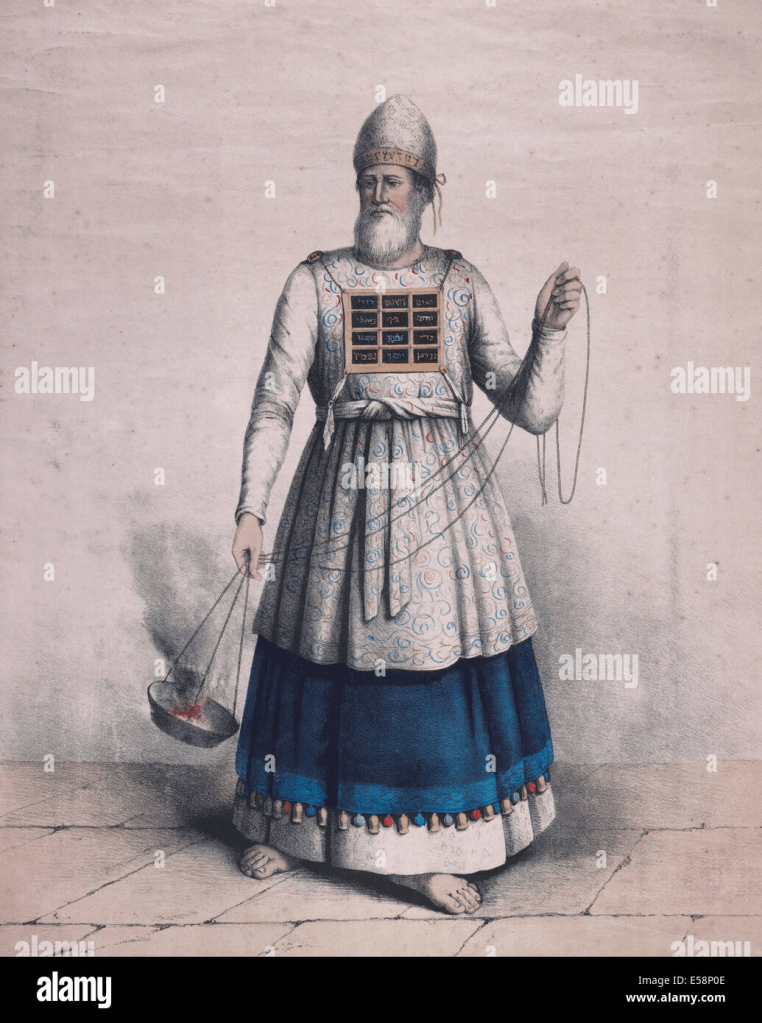
The High Priest took blood into both apartments of The Tabernacle of Meeting. He was the only cleric that carried blood into the Sanctuary, and he only did so each year, on the great Day of Atonement. It is also important to note that this king-priest, was the only member of the Levitical priesthood that is recorded to have slaughtered any animal. The first animal killed by Aaron on The Day of Atonement was a bullock. This sin offering was larger and more valuable because of the exalted status of the priests. Any transgression committed by any of them would be considered to be more odious by the divine judge. Some

of the bull’s blood was taken directly into the Most Holy Place by Aaron himself. He also carried a censer full of live coals. On the glowing coals, he sprinkled incense. So that when he arrived in The Most Holy Place, the sweet-smelling fragrance of the incense would ascend as a cloud, and the high priest’s life would be spared. The incense represented the righteousness of Christ. Without which no human can approach or survive before God’s holy presence. The blood of the bull was sprinkled once upon the eastern side of the golden plate that covered the Ark of The Covenant. Then seven times directly in front of The Ark of The Covenant.

The High priest would then leave the Most Holy Place and while doing so he would pass through The Holy Place and sprinkle the same blood seven times in the first apartment of the Sanctuary. Thereafter, he went outside into the Outer Court and selected a goat for The Lord, which would become the Sin Offering for the congregation. That goat would also be slaughtered. Its blood was then taken into The Most Holy Place. The ceremony in its entirety that was performed the first time was then repeated. On each occasion, the blood was sprinkled once upon the eastern side of the Ark’s covering because beneath the covering were the two tablets on which the Ten Commandments were written. “Whoever commits sin also commits lawlessness, and sin is lawlessness.” 1 John 3:4. God’s law demands the death of every sinner. For the wages of sin is death, but the gift of God is eternal life in Christ Jesus our Lord.” Romans 6:23 Not only is God’s sacred law the foundation of His throne. It is also the only standard of righteousness. Not only in life but also in God’s Investigative Judgment. The tents of the priests were on the eastern side of the camp. Furthermore, when Jesus returns in the clouds of heaven He will appear in the eastern sky. Not only to save His people but also to take vengeance on the wicked.

Throughout the twelve months of each year, the sins of the people were continually transferred to The Holy Place of The Tabernacle of Meeting. Therefore an annual cleansing of the same, at the end of each year, became necessary. Untransferred sins from which members of the congregation had not repented, and from which they were not separated. Remained upon the head of each impenitent sinner. Accordingly, such sins could not be cleansed from the sanctuary because they had not been transferred. All such individuals were cut off from the congregation of Israel. Because their sins had not been removed from themselves and consequently they had not been forgiven. This annual Festival of The Atonement was a most solemn occasion. The people of Israel wept over their sins and begged The Lord Almighty for clemency. “And the Lord spoke to Moses, saying: ‘Also the tenth day of this seventh month shall be the Day of Atonement. It shall be a holy convocation for you; you shall afflict your souls, and offer an offering made by fire to the Lord.  And you shall do no work on that same day, for it is the Day of Atonement, to make atonement for you before the Lord your God.  For any person who is not afflicted in soul on that same day shall be cut off from his people. And any person who does any work on that same day, that person I will destroy from among his people. You shall do no manner of work; it shall be a statute forever throughout your generations in all your dwellings. It shall be to you a sabbath of solemn rest, and you shall afflict your souls; on the ninth day of the month at evening, from evening to evening, you shall celebrate your sabbath.” Leviticus 23:26-32

All of these regulations were prophetic of a future great event. “Then I saw another angel flying in the midst of heaven, having the everlasting gospel to preach to those who dwell on the earth—to every nation, tribe, tongue, and people— saying with a loud voice, “Fear God and give glory to Him, for the hour of His judgment has come; and worship Him who made heaven and earth, the sea and springs of water.” Revelation 14:6-7. All animals sacrificed throughout the course of each year and also on The Day of Atonement represented Christ. “The next day John saw Jesus coming toward him, and said, ‘Behold! The Lamb of God who takes away the sin of the world!'” John 1:29. The Aaronic High Priest also represented Christ our Saviour. The fact that the High Priest killed both sin offerings himself was also significant. As Jesus poignantly asserted, “Therefore My Father loves Me because I lay down My life that I may take it again.  No one takes it from Me, but I lay it down of Myself. I have power to lay it down, and I have power to take it again. This command I have received from My Father.” John 10:17-18. Is there any greater paradox in human history? Not only is the Son of God the substitutionary sacrifice. He is also the Melchizedek High Priest. “Seeing then that we have a great High Priest who has passed through the heavens, Jesus the Son of God, let us hold fast our confession. For we do not have a High Priest who cannot sympathize with our weaknesses but was in all points tempted as we are, yet without sin. Let us, therefore, come boldly to the throne of grace, so that we may obtain mercy and find grace to help in time of need.” Hebrews 4:14-16.

Categories
Uncategorized

BLOOD, BLOOD, EVERYWHERE BUT NOT A DROP TO DRINK

The human consumption of blood was strictly forbidden by divine decree. No citizen or resident alien of Israel was permitted to ingest any blood at any time while living in the Holy Land or residing anywhere else on earth. In order to be considered one of God’s special people, all dietary intake of blood had to be spurned.

“And whatever man of the house of Israel, or of the strangers who dwell among you, who eats any blood, I will set My face against that person who eats blood and will cut him off from among his people. For the life of the flesh is in the blood, and I have given it to you upon the altar to make atonement for your souls; for it is the blood that makes atonement for the soul.’ Therefore I said to the children of Israel, ‘No one among you shall eat blood, nor shall any stranger who dwells among you eat blood.’ Leviticus 17:10-12

This practice was upheld even in the Christian Church because new believers were strictly cautioned to avoid the intake of blood.

“We have therefore sent Judas and Silas, who will also report the same things by word of mouth. For it seemed good to the Holy Spirit, and to us, to lay upon you no greater burden than these necessary things:  that you abstain from things offered to idols, from blood, from things strangled, and from sexual immorality. If you keep yourselves from these, you will do well. Farewell.” Acts 15:27-29.

Within the Outer Court of the wilderness sanctuary, there was always a great deal of blood. Because animal sacrifices were frequently being killed in that location. Not only bullocks, sheep, and goats but also birds. The person who invariably did the slaughtering was the penitent sinner. He always entered that specified area leading the substitutionary sacrifice with a rope. Or carrying it in his hands.

Now the Lord called to Moses, and spoke to him from the tabernacle of meeting, saying, “Speak to the children of Israel and say to them: ‘When any one of you brings an offering to the Lord, you shall bring your offering of the livestock—of the herd and of the flock. ‘If his offering is a burnt sacrifice of the herd, let him offer a male without blemish; he shall offer it of his own free will at the door of the tabernacle of meeting before the Lord. Then he shall put his hand on the head of the burnt offering, and it will be accepted on his behalf to make atonement for him. He shall kill the bull before the Lord; and the priests, Aaron’s sons, shall bring the blood and sprinkle the blood all around on the altar that is by the door of the tabernacle of meeting. And he shall skin the burnt offering and cut it into its pieces. The sons of Aaron the priest shall put fire on the altar and lay the wood in order on the fire. Then the priests, Aaron’s sons, shall lay the parts, the head, and the fat in order on the wood that is on the fire upon the altar; but he shall wash its entrails and its legs with water. And the priest shall burn all on the altar as a burnt sacrifice, an offering made by fire, a sweet aroma to the Lord. Leviticus 1:1-9.

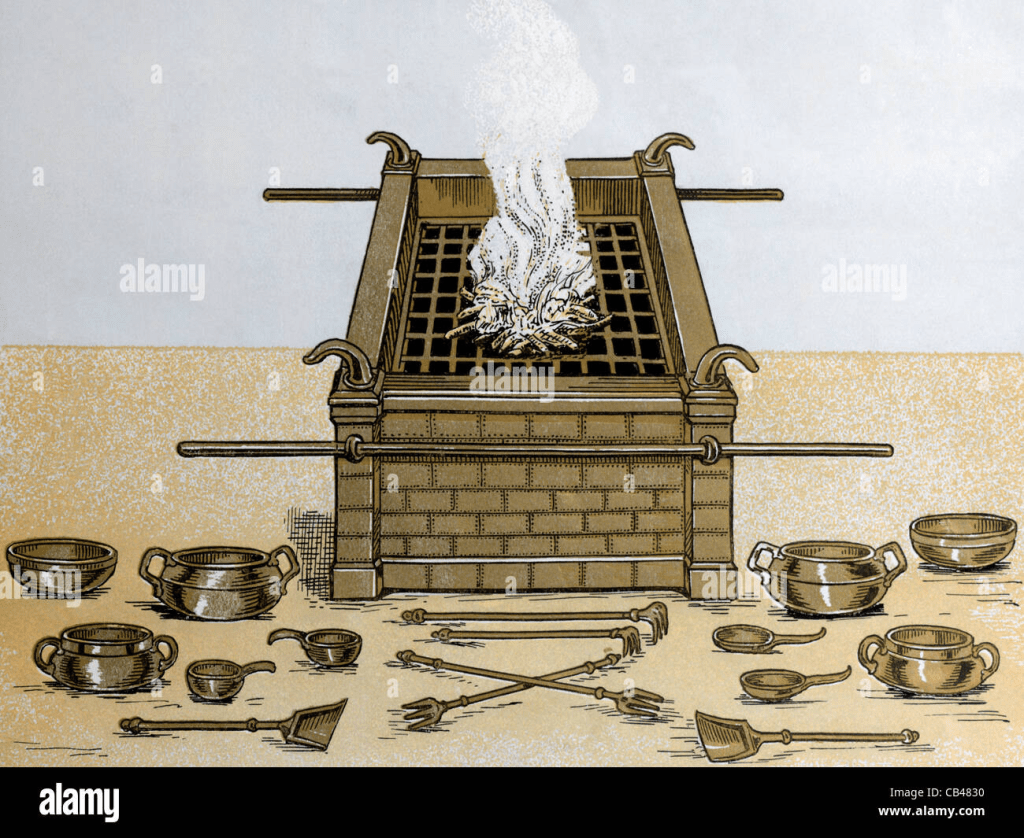
The contrite malefactor himself slaughtered the animal, skinned it, washed it, and cut it into several pieces. But only the Aaronic priest took the blood and sprinkled it upon all four sides of the brazen altar. Thereafter, he placed and arranged all the pieces of the burnt offering in order upon the altar, and inserted firewood beneath it so that it would be completely consumed. These acts of the repentant sinner and the priest represent two different periods of time. The dispensation of the Hebrew Church in which the Saviour was cut in pieces by human treachery and wickedness and actually killed. Followed by the Christian era when all the merits and righteousness of Christ would benefit every Christian believer. They would be cleansed by His blood, just as the blood of the sacrifice was repeatedly sprinkled upon all four sides of the Brazen Altar. They would also be covered by His life just as the priest carefully arranged every piece of the sacrifice upon the grill of the altar.

The offering made by fire was a sweet-smelling aroma to The Lord. Because the Burnt Offering represented the sinless, perfect life that the Saviour lived on earth before His sacrificial death. His perfect life was especially pleasing to The Father. “When He had been baptized, Jesus came up immediately from the water; and behold, the heavens were opened to Him, and He saw the Spirit of God descending like a dove and alighting upon Him. And suddenly a voice came from heaven, saying, “This is My beloved Son, in whom I am well pleased.” Matthew 3:16-17.

On The Day of Atonement (Yom Kippur), blood was especially significant. Throughout the course of each year, the sins of the penitent worshippers were transferred to the Altar of Burnt Offering. From there they were transferred by the ministering priests to The Tabernacle of Meeting who entered to eat and drink at the Table of The Show Bread and also to trim the lamps and pour oil into them. By the time The Festival of The Atonement arrived many sins had accumulated in the Sanctuary and accordingly The Tabernacle of Meeting had to be cleansed of all sins once every year. One of the cogent truths carefully taught in scripture is that the Aaronic priestly family were sinners. Not high-handed, rebellious, impenitent sinners. But erring mortals nevertheless. Therefore when The Day of Atonement arrived Aaron the high priest had to ensure that the sins of his family were atoned for.

“And Aaron shall bring the bull of the sin offering, which is for himself, and make atonement for himself and for his house, and shall kill the bull as the sin offering which is for himself. Then he shall take a censer full of burning coals of fire from the altar before the Lord, with his hands full of sweet incense beaten fine, and bring it inside the veil. And he shall put the incense on the fire before the Lord, that the cloud of incense may cover the mercy seat that is on the Testimony, lest he dies. He shall take some of the blood of the bull and sprinkle it with his finger on the mercy seat on the east side, and before the mercy seat he shall sprinkle some of the blood with his finger seven times.” Leviticus 16:11-14.

(TO BE CONTINUED)


Categories
Uncategorized

HOW TO BE VINDICATED IN THE PRE-ADVENT JUDGEMENT (CONTINUED)

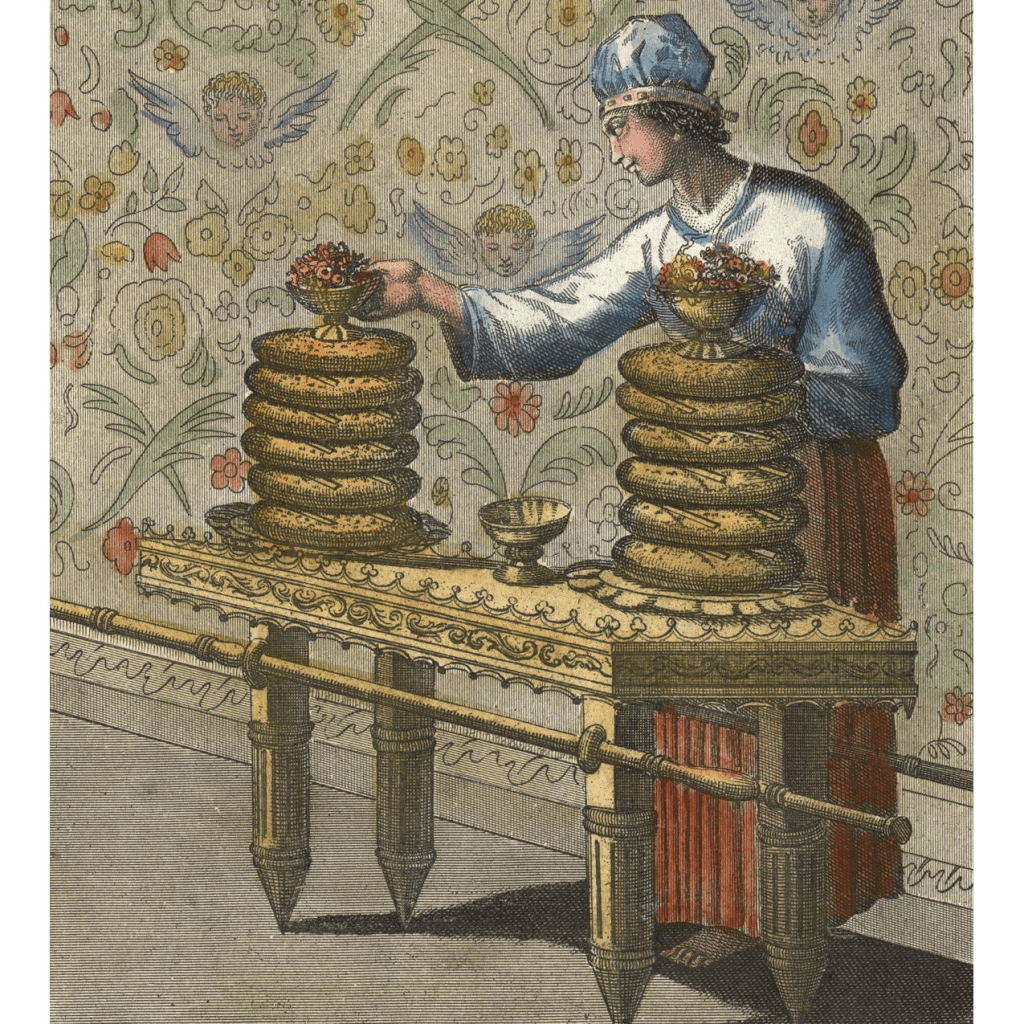
Within the Outer Court, the officiating priest ate all of the sin offerings (1), unless its blood was first sprinkled within the Holy Place. In which case the carcass of the animal, usually a bullock, was taken outside the camp and burned. He also ate all of the trespass offerings (1), but only half of the peace offerings (1/2). It is interesting to note that these same numbers are replicated within The Holy Place. For example, the Altar of Incense was 1 cubit squared but 2 cubits high. The Table of The Showbread was 2 cubits long, 1 cubit wide, and 11/2 cubits high. The implication is unmistakably clear. The same people officiating in the Outer Court, i.e. sacrificing the animal, sprinkling the blood upon the four sides of The Brazen Altar, and eating the sacrifice. Are the very same people within The Holy Place celebrating the emblems of salvation?

What is the significance of all these facts? It is that there are no shortcuts in the plan of salvation. In order to benefit from God’s wonderful grace. You must become a penitent sinner and acknowledge that it was your transgressions that led Jesus to the cross. You must also submit to being sprinkled continually with the cleansing blood of God’s Lamb. Just as the five wise virgins, represented by the Brazen Altar. Were continually sprinkled and cleansed by the blood of the animals sacrificed thereon. The fact that The Altar represents God’s people is clearly taught in scripture. “Then Elijah said to all the people, “Come here to me.” They came to him, and he repaired the altar of the Lord, which had been torn down. Elijah took twelve stones, one for each of the tribes descended from Jacob, to whom the word of the Lord had come, saying, “Your name shall be Israel.” With the stones, he built an altar in the name of the Lord, and he dug a trench around it large enough to hold two seahs of seed.” 1Kings 18:30-32.

Just in case we miss the fact that the five wise virgins are clearly represented in The Holy Place of the earthly sanctuary. There were five poles divided into two categories. The middle pole was invisible because it penetrated a hole that went through all of the twenty boards on the northern and southern sides of The Tabernacle of Meeting. Then there were another four poles mounted on the surface of the twenty boards on both sides of the same. This arrangement of the five poles announces to us that not only do the five wise virgins adhere to the Ten Commandments and the gospel of Moses. But they also obey the testimony of the four evangelists, Matthew, Mark, Luke, and John. “All Scripture is given by inspiration of God and is profitable for doctrine, for reproof, for correction, for instruction in righteousness, that the man of God may be complete, thoroughly equipped for every good work. 2 Timothy 3:16-17. Accordingly, those people who claim that they are adherents of only the Old Testament, or only the New Testament, or only The Psalms are wasting their time.

The 12 loaves of bread were arranged in two piles of sixes (6 6), side by side. On the Table of The Showbread and were eaten daily by the priests. Clearly indicating approximately 2000 years before all the books of the bible were finally and formally canonized. That all of God’s Word would encompass exactly 66 books. Although frequently overlooked and even ignored this was an amazing prophecy.

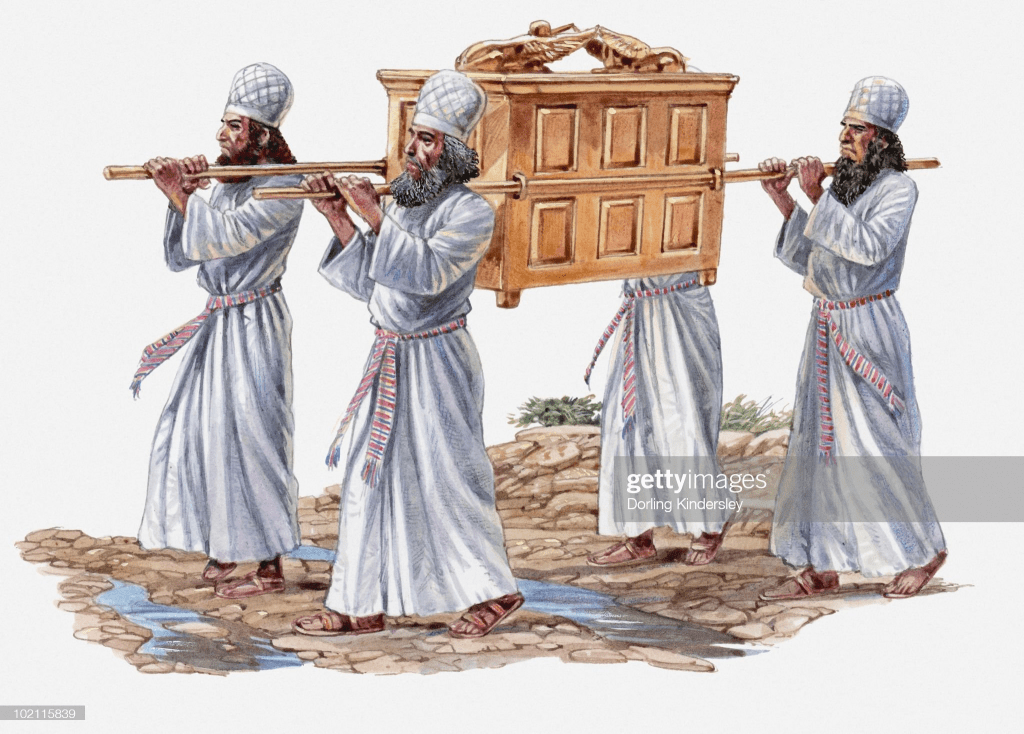
There were actually six items of furniture. Two were located in the Outer Court (The Brazen Altar and The Brazen Laver). Three were present within The Tabernacle of Meeting (The Altar of Incense, The Table of The Showbread, and the seven-branched Candelabra). Within The Most Holy Place, there was only one furniture Item. Namely, The Ark of The Covenant. Whenever it was necessary for the children of Israel while journeying through the wilderness, to move camp. These furniture items were appropriately wrapped, lifted by the carrying bars secured in the rings on both sides of the furnishing, and carried on the shoulders of the Levites. Although the Kohathite division of the Levites was permitted to carry these furnishings. They were not permitted to enter the sanctuary. Nor were they permitted to look at the furnishings contained in the two apartments thereof, while the priests wrapped them in their coverings.

Then the Lord spoke to Moses and Aaron, saying: “Do not cut off the tribe of the families of the Kohathites from among the Levites; but do this in regard to them, that they may live and not die when they approach the holiest things: Aaron and his sons shall go in and appoint each of them to his service and his task. But they shall not go in to watch while the holy things are being covered, lest they die.” Numbers 4:17-20.

This prohibition might seem severe but there is a reasonable and simple explanation for this divine command. First, there are mysteries in the plan of salvation. Not even Moses understood the significance of all the instructions God gave to him pertaining to the Sanctuary. Everything to be revealed would only be understood at the appropriate time. None of the items of furniture in The Tabernacle of Meeting pertained to the dispensation before the cross. The priests were permitted to go in and out of The Holy Place, and view the items of furnishing present therein because they represented the believers of the gospel era. Everything relevant to The Old Testament era was on full display within the Outer Court.

Everything in the two apartments of The Tabernacle of Meeting would only be fully understood. After the death of Christ and the commencement of His High Priestly Melchizedek Ministry. “Then He said to them, ‘O foolish ones, and slow of heart to believe in all that the prophets have spoken! Ought not the Christ to have suffered these things and to enter into His glory?’ And beginning at Moses and all the Prophets, He expounded to them in all the Scriptures the things concerning Himself.” Luke 24:25-27. Four Levites bore the furnishings because the number 4, represents God’s people. There were two carrying poles because the eternal truths represented by the furnishings would be clearly taught in The Old and New Testaments. These eternal and saving truths would be encapsulated in the lives of God’s people in every age and every era of earth’s history until the end of time.

Categories
Uncategorized

HOW TO BE VINDICATED IN THE PRE-ADVENT JUDGMENT (CONTINUED)

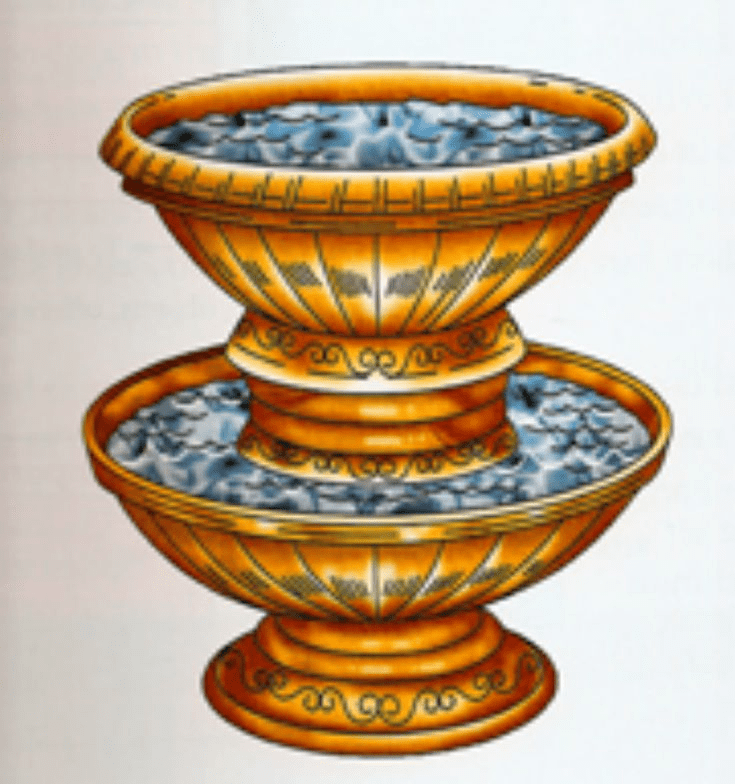
Before ministering at the Altar of Burnt Offering and previous to entering the Holy Place, each priest would wash his hands and his feet in the Brazen Laver. “Then the Lord spoke to Moses, saying:  “You shall also make a laver of bronze, with its base also of bronze, for washing. You shall put it between the tabernacle of meeting and the altar. And you shall put water in it, for Aaron and his sons shall wash their hands and their feet in water from it. When they go into the tabernacle of meeting, or when they come near the altar to minister, to burn an offering made by fire to the Lord, they shall wash with water, lest they die. So they shall wash their hands and their feet, lest they die. And it shall be a statute forever to them—to him and his descendants throughout their generations.” Exodus 30:17-21.

This ritual washing was an essential part of the plan of salvation. It was a representation of baptism. Because it symbolized the new birth. All of these rites and ceremonies were sacred. Therefore, only born-again people were qualified to partake of them. The priests were worship leaders. Symbols of what The Lord Almighty desired the people of Israel to become. Accordingly, not only were they required to be cleansed in the blood of Jesus, the true meaning of the washing. It is especially important to note that only those who believe in Christ and are baptized will have life. Those who reject God’s invitation will be destined for eternal death. “And He said to them, ‘Go into all the world and preach the gospel to every creature. He who believes and is baptized will be saved, but he who does not believe will be condemned.” Mark 16:15-16.  The priests also had to be dressed in white. A symbol of the pure status of righteousness that the redeemed would occupy at the end of the ages. As we are instructed in the apocalypse.

“Then one of the elders answered, saying to me, “Who are these arrayed in white robes, and where did they come from?” And I said to him, “Sir, you know.” So he said to me, “These are the ones who come out of the great tribulation, and washed their robes and made them white in the blood of the Lamb.” Revelation 7:13-14.

Baptism is the only way to enter the Christian Church. Since that institution is the body of Christ. “For as the body is one and has many members, but all the members of that one body, being many, are one body, so also is Christ. For by one Spirit we were all baptized into one body—whether Jews or Greeks, whether slaves or free—and have all been made to drink into one Spirit. For, in fact, the body is not one member but many…Now you are the body of Christ, and members individually.1Corinthians 12: 12-14, 27. All of the items of furnishing and also the twenty boards standing erectly in the northern and southern sections of the Tabernacle are covered with gold. So are the eight boards standing in the western section of The Most Holy Place. The gold represents the unadulterated, spotless, and impeccable righteousness of Christ. There are twenty boards in the northern and southern sections of the Fence around the Court and they are also present in the same locations within The Tabernacle of Meeting. The warning being declared in the Fence around The Outer Court is being repeated here.

The members of the human race who keep The Ten Commandments (10 + 10) are those who will be cleansed by the blood of Jesus and covered with His life. Jesus told the parable about the ten virgins. That number represents the totality of humanity. But only five virgins were actually saved. Those who faithfully adhered to the teachings of Moses (Genesis, Exodus, Leviticus, Numbers, and Deuteronomy). “How can you believe, who receive honor from one another, and do not seek the honor that comes from the only God?  Do not think that I shall accuse you to the Father; there is one who accuses you—Moses, in whom you trust. For if you believed Moses, you would believe Me; for he wrote about Me. But if you do not believe his writings, how will you believe My words?” John 5:44-47. All the boards within The Tabernacle of Meeting were standing upon silver footings/foundations. The boards comprising the fence of The Outer Court were crowned with silver Capitals and held in place by silver braces. Silver in scripture invariably represents God’s Word. “The words of the Lord are pure words Like silver tried in a furnace of earth, Purified seven times.” Psalm 12:6.

In every age of earth’s history, God’s true people lived up to the standard of righteousness declared in God’s Word; they were supported by God’s Word; and even during the era of the Christian Church, they will stand firmly upon the foundation of God’s Word. Heaven does not demand more than this of its citizens. But it will be satisfied with no less. As we read in scripture, “Blessed is the man Who walks not in the counsel of the ungodly, Nor stands in the path of sinners, Nor sits in the seat of the scornful; But his delight is in the law of the Lord, And in His law, he meditates day and night.” Psalm 1:1-2. God’s law within this context is the five books of Moses.