The High Priest took blood into both apartments of The Tabernacle of Meeting. He was the only cleric that carried blood into the Sanctuary, and he only did so each year, on the great Day of Atonement. It is also important to note that this king-priest, was the only member of the Levitical priesthood that is recorded to have slaughtered any animal. The first animal killed by Aaron on The Day of Atonement was a bullock. This sin offering was larger and more valuable because of the exalted status of the priests. Any transgression committed by any of them would be considered to be more odious by the divine judge. Some

of the bull’s blood was taken directly into the Most Holy Place by Aaron himself. He also carried a censer full of live coals. On the glowing coals, he sprinkled incense. So that when he arrived in The Most Holy Place, the sweet-smelling fragrance of the incense would ascend as a cloud, and the high priest’s life would be spared. The incense represented the righteousness of Christ. Without which no human can approach or survive before God’s holy presence. The blood of the bull was sprinkled once upon the eastern side of the golden plate that covered the Ark of The Covenant. Then seven times directly in front of The Ark of The Covenant.
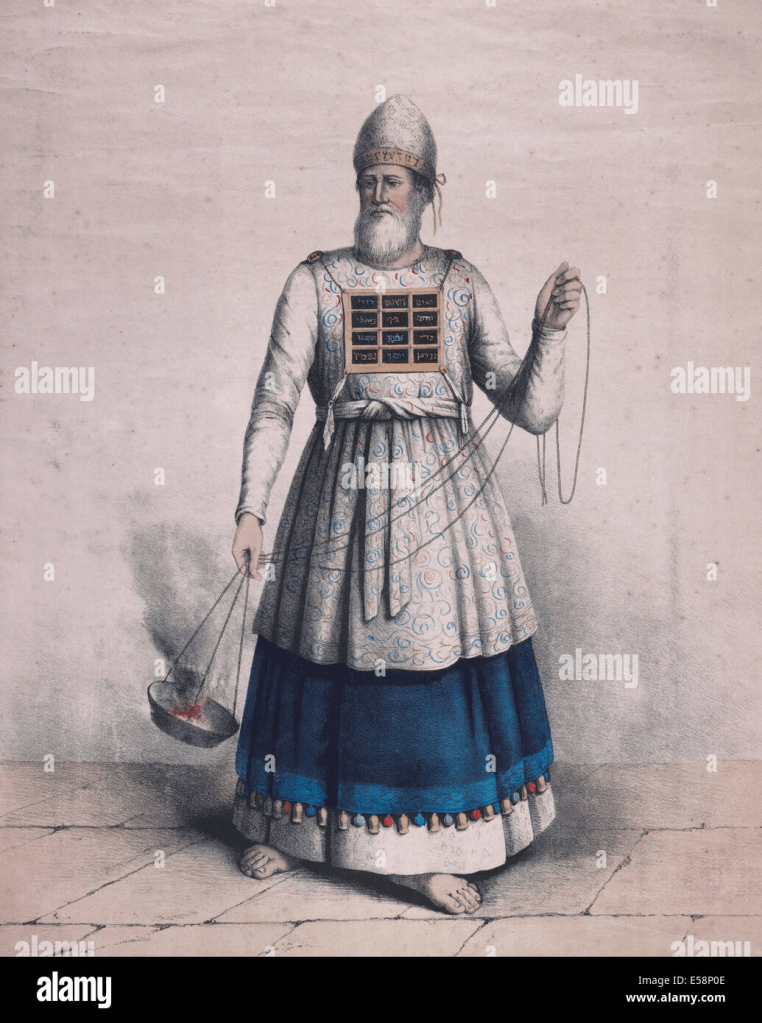
The High priest would then leave the Most Holy Place and while doing so he would pass through The Holy Place and sprinkle the same blood seven times in the first apartment of the Sanctuary. Thereafter, he went outside into the Outer Court and selected a goat for The Lord, which would become the Sin Offering for the congregation. That goat would also be slaughtered. Its blood was then taken into The Most Holy Place. The ceremony in its entirety that was performed the first time was then repeated. On each occasion, the blood was sprinkled once upon the eastern side of the Ark’s covering because beneath the covering were the two tablets on which the Ten Commandments were written. “Whoever commits sin also commits lawlessness, and sin is lawlessness.” 1 John 3:4. God’s law demands the death of every sinner. “For the wages of sin is death, but the gift of God is eternal life in Christ Jesus our Lord.” Romans 6:23 Not only is God’s sacred law the foundation of His throne. It is also the only standard of righteousness. Not only in life but also in God’s Investigative Judgment. The tents of the priests were on the eastern side of the camp. Furthermore, when Jesus returns in the clouds of heaven He will appear in the eastern sky. Not only to save His people but also to take vengeance on the wicked.
Throughout the twelve months of each year, the sins of the people were continually transferred to The Holy Place of The Tabernacle of Meeting. Therefore an annual cleansing of the same, at the end of each year, became necessary. Untransferred sins from which members of the congregation had not repented, and from which they were not separated. Remained upon the head of each impenitent sinner. Accordingly, such sins could not be cleansed from the sanctuary because they had not been transferred. All such individuals were cut off from the congregation of Israel. Because their sins had not been removed from themselves and consequently they had not been forgiven. This annual Festival of The Atonement was a most solemn occasion. The people of Israel wept over their sins and begged The Lord Almighty for clemency. “And the Lord spoke to Moses, saying: ‘Also the tenth day of this seventh month shall be the Day of Atonement. It shall be a holy convocation for you; you shall afflict your souls, and offer an offering made by fire to the Lord. And you shall do no work on that same day, for it is the Day of Atonement, to make atonement for you before the Lord your God. For any person who is not afflicted in soul on that same day shall be cut off from his people. And any person who does any work on that same day, that person I will destroy from among his people. You shall do no manner of work; it shall be a statute forever throughout your generations in all your dwellings. It shall be to you a sabbath of solemn rest, and you shall afflict your souls; on the ninth day of the month at evening, from evening to evening, you shall celebrate your sabbath.” Leviticus 23:26-32
All of these regulations were prophetic of a future great event. “Then I saw another angel flying in the midst of heaven, having the everlasting gospel to preach to those who dwell on the earth—to every nation, tribe, tongue, and people— saying with a loud voice, “Fear God and give glory to Him, for the hour of His judgment has come; and worship Him who made heaven and earth, the sea and springs of water.” Revelation 14:6-7. All animals sacrificed throughout the course of each year and also on The Day of Atonement represented Christ. “The next day John saw Jesus coming toward him, and said, ‘Behold! The Lamb of God who takes away the sin of the world!'” John 1:29. The Aaronic High Priest also represented Christ our Saviour. The fact that the High Priest killed both sin offerings himself was also significant. As Jesus poignantly asserted, “Therefore My Father loves Me because I lay down My life that I may take it again. No one takes it from Me, but I lay it down of Myself. I have power to lay it down, and I have power to take it again. This command I have received from My Father.” John 10:17-18. Is there any greater paradox in human history? Not only is the Son of God the substitutionary sacrifice. He is also the Melchizedek High Priest. “Seeing then that we have a great High Priest who has passed through the heavens, Jesus the Son of God, let us hold fast our confession. For we do not have a High Priest who cannot sympathize with our weaknesses but was in all points tempted as we are, yet without sin. Let us, therefore, come boldly to the throne of grace, so that we may obtain mercy and find grace to help in time of need.” Hebrews 4:14-16.

 aadventuresinghana.wordpress.com